Home > Interviews >
Kid Capri & Doo Wop: Return Of The Deejay

Kid Capri & Doo Wop: Return Of The Deejay

09.10.08   |   by Mina Jasarevic
Kid Capri & Doo Wop: Return Of The Deejay
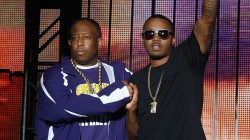
Back in April HipHopDX found it necessary to bring to you a piece on the evolution of the mixtape [click to read]. A joint aiming to explore the development of the tape itself, including its imperative role in Hip Hop as it became a colossal marketing tool for rappers, deejays, and soon enough, labels. We chopped it up with rappers and minced with deejays, and no matter how deeply the subject was explored, curiosity still remained. DX then decided to contact two of the most notable deejays of the '90s – DJ Doo Wop and Kid Capri – and go deeper: from Lil Wayne’s comments against deejays back in May [click to read] to the striking similarities between our two subjects. We also asked the former tape competitors to comment on one another (you may be surprised).

Aside from being known as the creator of what is now the main ingredient for a tape (Doo Wop was the first deejay to feature popular artists on his tapes), he grabbed the industry’s attention most recently when he oh so cleverly and creatively crafted two video clips as a response to Lil Wayne’s statements against Hip Hop deejays. Although many artists were shocked at the uttering made by the often-intoxicated and self-proclaimed “alien,” few have condemned his attacks on Hip Hop’s staple: the deejay:

You cats kill me when you say that it isn’t that serious. Never mind the fact that he straight up shitted on the very thing that made him a household name," said Doo Wop. "Then he said “fuck mixtape deejays and if you’re a mixtape deejay, suck my dick.' Wow! I guess if you were walking down the street and some dude tells you to [do so], you’re gonna let it go, huh”?

Kid, who is not only known for the enthralling chemistry between he and the crowd but is also a credited producer of industry’s best, including Big L, The L.O.X., and Jay-Z (among others), touches on the significance of Wayne’s words:

A lot of deejays were offended. To some dudes you can’t say ‘sorry’ because certain things that you might say leave that scar. And you gotta remember, the mixtape thing didn’t start in the south, it didn’t start in the west coast; it started in New York. And here even, you would never hear me doing the interview and say ‘I’m the creator, I did this or I started that’ even though I know I’m the reason why a lot of deejays have jobs right now […] if you want to even take it from the artist’s standpoint, really, 50 [Cent] was the one that made it become a phenomenon."

For all the right reasons both Doo Wop and Kid (as well as many other deejays) are expected to catch feelings over Wayne’s attacks. However, his mini-rant did not just cause a backlash amongst the record-spinners, it also opened room for an important question: are deejay's eating off of rappers’ plates without depositing a return? Specifically, are deejays using artists for their personal gains without compensation them for their work and artistic creativity? “Yes they are, but I am not one of them and never was. Did I make money off of tapes? Hell yeah but I didn’t exploit the artist: I helped the artist gain street credibility,” Doo Wop clarifies, while explaining the dependency notion between the rapper and the deejay:

Back in the mid '90s there wasn’t MySpace, Youtube, etc. The only way for a rapper to get his freestyles out was through the mixtape. And since I started the whole ‘freestyling on tapes,' they usually wanted to get their shit off of my joints.”

What Lil Wayne and followers fail to acknowledge perhaps, is that the deejay was one of most effective promotional tools for most rappers, and in many cases, continues to be so today. Certain deejays set trends that would later pave the way for the success of some of the most prominent commercial artists today (50 Cent, Fabolous). One of those trends is the signing of the deejay to a label, which officially certified both the marketability and the lucrative return of the mixtape, and Kid Capri, a/k/a "Mr. Love," who is currently working on his new album, The Whole World’s Behind David Love, was the first to get signed, to the historic Cold Chillin' Records. “That was a big thing because you never had a deejay become an artist, being able to get a deal just for being a deejay.

But it’s not just about paying dues; more importantly, it’s about examining the character of such legends, and learning from the choices they made, which could perhaps explain not only why they became so successful, but also why, far from mediocre content, we often receive ‘quality music’ from such artists. As one would expect, Capri for example, constantly receives offers of financial incentives to play certain artists and give them exposure; however, "Mr. Love" never took the bait:

I’m not gonna sell myself out to play a record that I don’t like just because of some money. I got this far because of the quality of what I do – and the only way I keep that quality is through my judgment. My judgment doesn’t tell me to take money for something that’s not in my better interest. And if that means I have to come up short for money just to make myself look good for the long run, then that’s what it is.

Some of those choices include ethics (as just seen with Capri) and others, include a commitment to innovation. Perhaps that is why Doo Wop’s 95 Live tape echoes strongly even today. “Nothing like that was ever done before,” states Doo Wop who has been on tour with Guru and Solar for the past three years while blessing 40 different countries. “Basically, to have one big-name rapper on your mixtape was damn near unheard of. The hottest album at the time was Only Built for Cuban Links and I had Raekwon [click to read] spitting over Trends of Culture's beat. I had Busta Rhymes [click to read] on there. Q-Tip [click to read], Guru [click to read], Fat Joe [click to read], M.O.P. , AZ [click to read], KRS-One [click to read], Mobb Deep [click to read], Lost Boyz [click to read] – too many more to name.”

Another similarity between the two spin masters is their ear for genres outside of Hip Hop, and more importantly, their open-minded mentality to experiment with music outside of the Hip Hop’s realm. “Hit music is hit music, no matter how you look [at it], no matter where you come from, no matter where you’re at. Good music is good music and that’s what people are gonna cling to,” says Capri, who is currently working with a rock band, Uninvited Guests, as well as Canadian Pop artist, Tina Brown, under his new label, No Kid’n Records.

Hip Hop is the greatest thing that ever happened but there is Rock music out there, there is Pop music out there, and all these different forms of music ultimately come back to Hip Hop. Hip Hop is Reggae, Hip Hop is Rock, Hip Hop is Classical, Hip Hop is street, Hip Hop is New Wave, Hip Hop is freestyle. Country music comes to Hip Hop – you can’t bring Reggae to Country: Hip Hop is most versatile.

And when Doo Wop (who hosted Guru and Solar’s Jazzmatazz tape) is asked whether deejays should be more open to incorporating other genres into Hip Hop, he does not hesitate:

Of course – but I don’t see it happening right now because everybody is stuck on the same thing. It’s not like artists are scared to try something new either. Look hard enough and you’ll find rappers incorporating other genres into their music but BET, MTV and your local radio stations ain’t fucking with it.

As similarities between the two 90s legends became clearer and clearer, so did their respect for one another – perhaps after the first-ever mixtape battle, which occurred between Capri and Doo Wop. “It brought a lot of attention to the mixtape deejays; it let them know we are artists,” says Capri. “At the end, me and him made a record, "The New York Mixtape Shit,” and it was all love. It was a professional thing." And although it was all professionalism, and even though Capri’s acceptance to the challenge helped Doo Wop gain further recognition, Kid doesn’t hesitate to give props where props are due:

Doo Wop is dope as far as the artist, as far as the rapper, as far as everything he does. He really put himself in it; he didn’t get in it just to be part of something – he really has that talent in him. He came at the man – he tried to come at the man [laughing], but he came at the man to get to that level, I think. That was how it all started. We responded to him which was 60% to 70% of his success as far as getting in the door. Because now I brought attention to him but then he took that and kept moving with it. So it works for him. If I didn’t say anything about Doo Wop, he probably wouldn’t have been out – or he might have come out in later years. But because I understood Hip Hop and I understood that I’m not gonna let anyone come at me like that, and I am who I am and I’m cocky like that, that’s what it is.

And of course, Doo Wop shares the same respect for Capri, with fewer words, but without less of admiration: “He knows how to rock a party no matter who’s in the crowd. His mic game is incredible. He’s timeless and he deserves to be significant as long as he wants to be.” And significant he is – aside from being deeply involved with the artists of Kid’N Records (he is releasing a mixtape with Budda Early, The Treatment, mid-September), one of the greatest deejays tours with one of the greatest emcees, Rakim. His counterpart, Doo Wop, also stays touring (either with Guru or solo), continues writing and he lately started experimenting with beats. “Also, me and Pete Rock [click to read] recently recorded seven songs together so we about to figure out what exactly we’re gonna do with it.

At the end of the day, a mixtape deejay isn’t much without a rapper and a rapper isn’t much without a deejay, and no matter how big of a Lil Wayne fan one is, that fact cannot – and should not - be denied. The importance of a solid relationship between the two is what will produce music – quality music – at the end of the day. By maintaining such good relationships with artists is how Doo Wop was able to obtain exclusive material (freestyles, unreleased remixes, etc.), which is what makes his tapes, such as The Last King of New York, eminent music:

Usually, if you have a good relationship with the artist or producer, it just takes a simple phone call or email. When me and Mike Nice did the Biggie CD, he brought so much vintage Big shit to the table that I was like, 'Damn, how am I gonna be able to stand next to this dude?' He had Biggie's demo sessions, rare exclusives that nobody ever heard. So what I did was call my man, Pete Rock, and he hit me with remixes that he had done for Big, but they were never released because Puff didn’t accept them. He gave me a remix for 'The What,' but Method Man's verse wasn’t on it, so I rhymed in those blank spots:.

It continues with 50:

I met 50 Cent [click to read] in 1999 when his first single 'How to Rob' was bubbling crazy. If cats wanted that ‘street love,’ they made sure that being featured on a Doo Wop tape is a priority. So 50 came through and did the now famous Guess Who's Back freestyle. When he finished his vocals, I expressed my appreciation for being on the tape and he said, ‘You’re thanking me? No, thank you. Your tapes are what kept me focused while I was locked up.' He started mentioning old shit that I did from like four years prior to that. He knew my history and I was flattered. That’s the day he said that I started the 'bounce' thing because ever since 1991, every time I made a tape, that was my slogan.

And if by chance, there are still those out there who would side with Wayne and even support his inconsiderate comments against the very people who helped blow him up, Capri offers a humble explanation of the importance to the deejay, and their purpose in this industry:

You can’t get nothing heard without a deejay playing it on the radio, on the mixtape, or in the club. We ain’t playing it, you ain’t hearing it. And that’s why they the number one thing in music as far as the music business goes, as far as the records go and all this shit. Every time I’m doing 3,000 people, 4,000 people a night and I’m playing someone’s song, I’m playing their song for 4,000 people – I’m doing them a favor, they’re not doing me one. I can continue and do my shit without their shit being heard in my party but every time I play it, there’s a guarantee that 4,000 people are hearing it. And that’s what these artists got to realize. You can’t go and say ‘fuck mixtape deejays’ and ‘fuck this deejay’ because if the whole deejay shit shuts your shit down, you’re over, period. Look at Young Buck [click to read]. When Buck did that crazy shit and disrespected that deejay at that party and The Core DJs found that out, his whole shit was shut down – couldn’t play a record nowhere.

We co-sign.

Post your comments

Name (required)
Email Address (required but not displayed)
Rep yourself (optional link displayed)

be heard. register now!

check it: Protect your username, one time log-in. upload a unique avatar. no more verification code. rate comments with the karma system. messageboard access. weekly newsletter.

click here to register

your comment